
Is Australia rigged for the rich?
Australia has more billionaires than ever before.
Each coin here represents an Australian billionaire or billionaire family. Back in 2015, there were 49 of them, worth a whopping A$126 billion all up.
Five years later, in 2020, the billionaire ranks had more than doubled to 104. And their combined wealth had almost tripled to about A$356 billion.
We’re now another six years on and, guess what, there are more again: 178 billionaires. And they’re richer too, worth a combined $687.25 billion – an average of $3.86 billion each.
If you were earning the average Australian salary of $82,000 and saved every bit of it, here’s how long it would take you to match that wealth.
The richest 20 Australians have more wealth than the bottom three million households combined.
So, how do billionaires do it?
It’s easy to imagine billionaires being like Scrooge McDuck diving into a swimming pool filled with gold coins, but in fact their wealth is mostly tied up in assets such as shares, property and businesses.
Imagine having $3 billion invested and earning a reasonable 7% annual return. You would become $210 million richer in a year without lifting a finger.
That’s a hypothetical example, but the actual figures are equally stark. Oxfam estimates the collective wealth of Australian billionaires grew by almost $50,000 per minute between 2025 and 2026.
Some of that wealth may have been created through successful business activities, which support jobs and provide goods and services.
But not all billionaire wealth is grown in this way. And entrepreneurship doesn’t obviate the questions of why the economic system is set up to concentrate an excessive share of wealth in very few hands.
While we can't say which billionaires are using specific financial tactics, when it comes to money-making, it's clear they do things a bit differently to us regular folks.
Billionaires pay less tax
Here's $100 of billionaire wealth and $100 of an average earner's income.
Economist Gabriel Zucman estimates the world’s billionaires pay taxes equal to just 0.3% of their wealth each year. Meanwhile, an average Australian earning $82,000 is taxed about 18-20% in Australia.
One of the ways billionaires minimise their tax is by borrowing against the shares they own. Strap in, here’s how it works.
Say our hypothetical billionaire has a $1 billion stake in a tech startup.
The company’s doing well, people are buying stocks and the share price skyrockets.
Their shares are worth a lot, but they can’t spend that money. It’s not cold hard cash. Yet.
If they sold their shares, they'd have to pay capital gains tax on the profit.
So instead, they take out substantial loans, secured against the shares. The technical term for this is a “securities backed line of credit”.
So now they have cash, they’ve avoided the tax, and their shares are continuing to appreciate and pay dividends, which can in turn be used to service the interest on their loans.
It's a cycle you can repeat again and again.
It's part of a broader strategy known as “buy, borrow, die”. Buy the shares, borrow against them, live well and eventually…
The “die” part is literal. Australia has no inheritance tax, so assets often pass to the next generation without any immediate tax being due. The capital gains tax liability does not necessarily disappear, but payment can be delayed until the beneficiary sells the assets.
All of this is perfectly legal.
More ways to avoid tax
Tax avoidance often lies in a grey zone, where arrangements may be legal, even if they don't pass the pub test.
The problem is big enough that the Australian Taxation Office has established the Tax Avoidance Taskforce to investigate “large private groups and wealthy individuals who deliberately and persistently avoid paying the right amount of tax”. They helped claw back more than $37.6 billion in the last ten years.
The taskforce investigates various tactics people use to avoid paying tax, including trusts and offshore accounts, not-for-profit companies with no real charitable purpose, and distributing profits through legal entities that do not report income.
Trusts are a classic case. It is perfectly legal and legitimate to use a trust to hold or distribute income from businesses and investments. We enter the grey area when they are primarily used to minimise or defer tax rather than to hold assets.
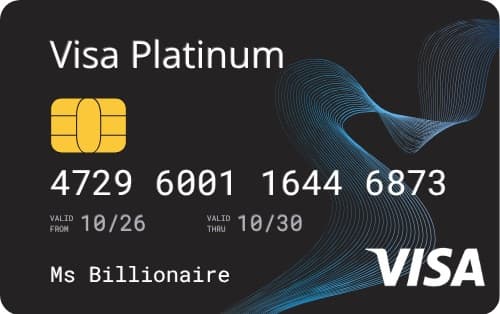







Here’s our billionaire again. They’re still flush with cash from their “buy, borrow, die” plan and now they want some new toys. They pop a fleet of cars, a wine cellar and some big nights out on the company card.
Their businesses might legitimately need these things, but it’s a blurry line between business and private expenses.
Here's how those cars and bottles of wine can be written off as corporate hospitality and travel expenses.
This isn't just a billionaire problem.
Tax authorities have long grappled with the challenge of distinguishing legitimate business expenditure from private consumption. The difference is, the richer you are, the more access you have to lawyers and accountants who know exactly how far the rules can be bent.
There's the grey zone, then there's just crime
After rules are bent, they're sometimes broken, with individuals concealing offshore income, falsifying accounting records, or hiding assets from regulators.
One of the most notorious cases in Australia was Christopher Skase, who fled to Spain in 1991 when his Qintex empire collapsed amid fraud allegations and liabilities reportedly exceeding US$1.6 billion (around A$2 billion in 1989). He spent a decade dodging extradition before dying in Majorca in 2001, having never faced trial.
Our billionaire is back. They’ve got the cash, the cars and now they see an opportunity to make some fast money trading oil with Russian oligarchs.
Under normal circumstances this is illegal, but if they set up a secret company that operates somewhere Russian trade isn’t sanctioned, they can do the deed and probably avoid taxes too. Win, and win again!
In 2016, an enormous trove of leaked documents, called the Panama Papers, exposed the inner workings of more than 214,000 offshore companies, linked to more than 200 countries.
The documents showed how these secret businesses could be used by the ultra-wealthy for tax evasion, fraud and skirting international sanctions.
Five years later, another leak known as the Pandora papers identified the secret offshore dealings of more than 130 billionaires, heads of state, and even an Australian accountant who helped establish offshore trusts and companies designed to keep financial affairs secret.
These spectacular cases attract enormous attention, but they also draw attention away from the more routine ways that billionaires hoard more and more of a nation’s wealth and pass it through generations through perfectly legal means.
The bigger questions we need to ask
The belief that success should be rewarded is a core part of Australian culture and the "fair go". It is who we are.
But is it really a fair go when the economic outcomes that some can achieve so far outstrip those available to everybody else? Is it fair that some hard-working citizens face intense and increasing pressures to make ends meet while others can passively see their wealth grow through perfectly legal means?
With rewards increasingly flowing to a select few, and the rest of Australia struggling with housing, groceries and stagnant wages, it's time for some serious economic reform if we're to restore our egalitarian ideals.
The reality of today’s Australia is that to be rich – really rich – you need assets. Working hard isn't enough. The question is: are we OK with that?
Author
Professor of Business and Society, University of Technology Sydney
Editorial production
 The Conversation Digital Storytelling Team
Development and design
 Matt Garrow
Editorial Web Developer
 Ashlynne McGhee
Head of Editorial Innovation

Disclosures
Carl Rhodes does not work for, consult, own shares in or receive funding from any company or organisation that would benefit from this article, and has disclosed no relevant affiliations beyond their academic appointment.

Republish our articles for free, online or in print, under Creative Commons licence.
 Built with Shorthand