
Where do peptides come from?
We found out
Over the past year, staff working in Australia’s needle and syringe programs have noticed something unusual.
They’ve been overwhelmed by demand for a thinner type of needle often used to inject heroin or methamphetamines.
But these requests aren't for heroin or methamphetamines. They're for a new kind of drug: peptides.
You might recognise the names of some approved peptides: Ozempic, Wegovy or Mounjaro.
But then there's retatrutide. It's not approved for use here because it's still in early trials as a potential treatment for obesity and related metabolic conditions. But that hasn't stopped it flooding Australia’s thriving online illicit market.
So how does an experimental medicine end up in needles made for injecting into a vein?
An online marketplace
I’ve been following the peptide market for 15 years. My research has tested image- and performance-enhancing drugs and I've interviewed the suppliers who sell them.
Buying retatrutide doesn’t require the dark web or a gym locker room, I just opened Instagram and a targeted ad appeared in my feed.
The peptide Instagram ad I clicked on.
The peptide Instagram ad I clicked on.
I decide to start a chat with them on WhatsApp, and this is what I receive.
To be clear, Australian laws prohibit the advertising of prescription medicines and unapproved therapeutic goods.
In Victoria alone, at least six people have been hospitalised after using illicit retatrutide.
But that hasn't stopped the sellers on Instagram, Telegram, WhatsApp or Facebook. Sometimes they use influencers, wellness coaches or beauty providers to spruik their products.
 These are all the specifications for our RT. Which
specification do you need?
These are all the specifications for our RT. Which
specification do you need?

Look closely, one box is labelled "For research use only".
Retatrutide is rarely sold on its own. As part of my research I've looked at offerings of various online peptide retailers. The same sellers typically offer dozens of experimental peptides marketed for weight loss, muscle growth, anti-ageing, recovery, tanning, libido or cognitive performance.
A range of peptides the supplier was offering. Photo: Peptide supplier.
A range of peptides the supplier was offering. Photo: Peptide supplier.
Most carry disclaimers like the research one, or “not for human consumption” — even while social media videos and online forums openly discuss how to inject them.
The seller I spoke to isn't an anomaly; a simple Google search returns dozens of websites advertising “research peptides”. Many look like legitimate health retailers, with shopping carts, discount codes, customer reviews and express shipping.
Products are manufactured overseas, kept in stock, listed online and shipped directly to customers after purchase.
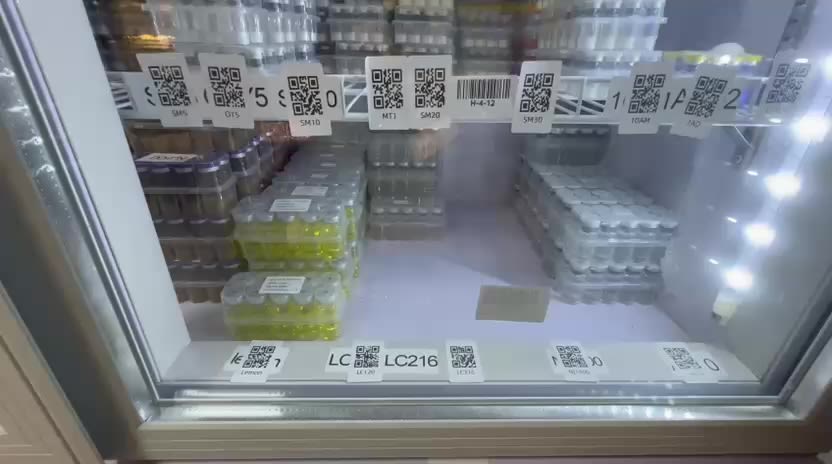
The peptide suppler sold dozens of other peptides besides retatrutide. Video: Peptide supplier.
The peptide suppler sold dozens of other peptides besides retatrutide. Video: Peptide supplier.
Here's where it gets tricky: the supplier I spoke with is operating in both legal and illegal territory.
Under Australian laws, they’re illegally selling unapproved medications and advertising illegally on social media, but this may not be the case across all other jurisdictions, including where they're based.
The product
Back to my vial of retatrutide. The supplier I spoke to insisted it was legitimate. They even sent through an analysis report they say proved the "peptide purity": 99.7%.
An analysis report the supplier sent through indicating a 99.7% purity (shown in red). Source: Peptide supplier.
peptide analysis report.
These reports aren't reliable and aren't evidence of the quality, let alone the safety of the product.
I ask the seller for a quote for ten small vials.
The peptide supplier provided an "official quotation". Source: Peptide supplier.
Order Confirmed - 10 x 10 Reta.
I don't follow through with the purchase.
This isn't a legal grey area: purchasing and importing an unapproved therapeutic good such as retatrutide is illegal. You can be fined up to $1.82 million and face up to five years in prison.
Read more: What are peptides? And why am I hearing so much about them?
As part of my research, I have acquired and tested other enhancement drugs with ethics approval. Sometimes that meant contacting a supplier directly but other times users would hand over vials to ROIDCheck clinics, where I led the drug testing research.
The peptides I've acquired, like these 10mg retatrutide doses, arrive packaged in a tiny glass vial holding what looks like an ordinary white powder. A label identifies its contents: GLOW75 20mg, MS30, GT600, RT10 – retatrutide 10 mg.
Alongside it, sometimes there are instructions explaining the powder needs to be mixed with sterile water before it can be injected.
Many peptide websites publish detailed reconstitution guides alongside their products, making the process appear almost routine.
You’d be right to think this all sounds a bit technical. Peptides are manufactured by chemists and require specialised machines.
So, if this tiny vial couldn’t have been made in a backyard lab, where did it actually come from?
The factory
Back in my WhatsApp chat, the supplier sends through a video of a professional looking chemical lab. They say it's where their retatrutide was made.
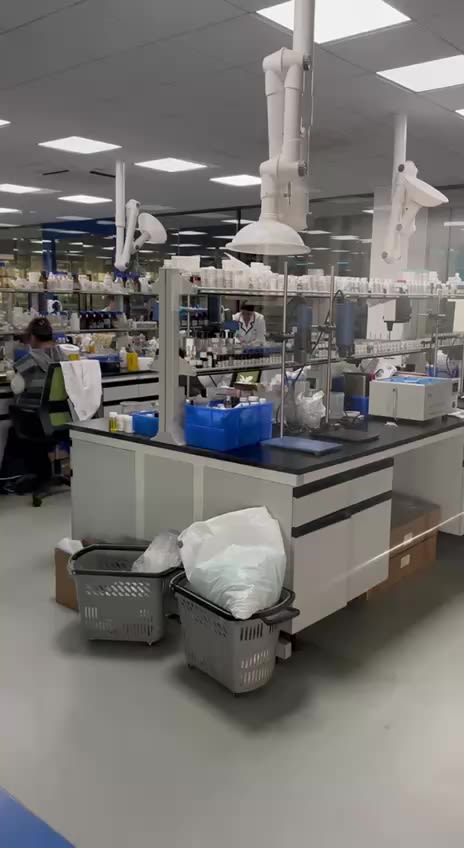
The peptide supplier sent this video as proof their product was made in a professional-looking lab. We can't verify if this was actually where their peptides were made. Video: Peptide supplier.
The peptide supplier sent this video as proof their product was made in a professional-looking lab. We can't verify if this was actually where their peptides were made. Video: Peptide supplier.
Where could it be?
Let’s start our search in China, where hundreds of biotechnology companies manufacture peptides for universities, pharmaceutical companies and medical researchers.
About 70 kilometres west of Shanghai is the Suzhou Industrial Park.
Lots of the factories here manufacture active pharmaceutical ingredients and custom compounds for clients worldwide.
Some companies openly advertise they can manufacture custom peptides and offer retatrutide for export.
Alongside the legitimate manufacturers there’s a parallel network of unlicensed “shadow factories”.
Research consistently identifies China as the dominant global manufacturer of enhancement drugs.
I’ve tested their products, and the purity ranges from 0% to 79%, meaning people buying these products risk receiving under-dosed, over-dosed or entirely mislabelled products.
The voyage
Unlike drugs such as cocaine or methamphetamine, which are often trafficked in kilogram quantities through organised criminal networks, peptides are shipped in tiny amounts directly to individual customers. Our abandoned order of ten vials of retatrutide holds about 100mg of peptide – less than the weight of a paperclip.
A vial is small, about the size of your thumb. A box of 10, all packaged up for shipping, is almost indistinguishable from the millions of legitimate parcels arriving in Australia every week.
The order is processed much like any other online shopping purchase. Within days a tracking number is generated. The parcel begins moving through international logistics hubs before boarding a flight to Australia.
Like countless online orders, it passes through customs and begins its journey to the door.
For authorities, it's a giant game of "whack-a-mole".
They can't inspect every package, so they rely on intelligence, risk profiling, X-ray screening and detector technologies to identify suspicious shipments.
They manage to intercept some, but inevitably many others pass through undetected.
And even if they do catch a shipment, they generally have little power to prosecute a supplier based overseas.
The consumer
The parcel’s final destination isn't a drug dealer; it's an ordinary Australian, who might be about to walk into a needle exchange requesting one of those thin-tipped needles.
Some are bodybuilders, others want them for weight loss, cosmetic treatments and “biohacking”.
It's likely some will end up in hospital, having consumed an illicit, unverified and at best experimental drug.
Read more: How wellness clinics bend the rules to supply unapproved peptides and anti‑ageing injections
So, what to do?
Peptides don’t fit neatly into the systems designed for either approved medicines or illicit drugs. By the time authorities identify one compound or frequent seller, another will emerge.
Keeping people safe requires more than border enforcement.
Australia needs earlier surveillance to identify emerging peptides before harms become widespread, independent steroid and peptide checking so people can verify what they’re actually injecting, and accessible, evidence-based information to compete with social media hype.
Harm reduction services also need to evolve, expanding initiatives such as ROIDCheck to include peptides, strengthening real-time monitoring through ROIDTrends, providing expert harm reduction advice through Steroid QNECT, and developing digital health literacy programs that help young people recognise misleading online marketing before they click “buy”.
Back on my WhatsApp chat, the seller is pumping me with information, videos and pictures. It's overwhelming.
But the more they send, the more I'm reminded how little we know.
Where are they based? Which factory is making it? Is it legitimate? Is it legal? And does that really matter anyway, because we can't answer the biggest question of all: what's really in that tiny vial?
I'm not buying this one, but millions more like it are already on their way.
Disclosures
Timothy Piatkowski receives funding from National Health and Medical Research Council, Queensland Mental Health Commission, Queensland Injectors Health Network, and Hyphen Health. He is affiliated with Queensland Injectors Voice for Advocacy and Action (Vice Chair), The Loop Australia (Research Lead - QLD), and The Enhanced Games (Performance Enhancement Task Force). He is a co-founder of Safe Pulse a charity focused on harm reduction for individuals who use human enhancement drugs.
Author
Senior Research Fellow in Public Health, The University of Queensland
Editorial production
 The Conversation Digital Storytelling Team
Development and design
 Matt Garrow
Editorial Web Developer
 Ashlynne McGhee
Head of Editorial Innovation
Data & Images
Suzhou Industrial Park outline: P. Waley, Y Jiang. Keeping up with the zones(es): how competing local governments in China use development zones as back doors to urbanization
Image of two vials of retatrutide were received as part of a research and testing project. Image: Timothy Piatkowski.

 Built with Shorthand